Telescopic Channels Explained: Manufacturer & Supplier Guide for Modular Furniture Systems

Telescopic Channels Explained: Manufacturer & Supplier Guide for Modular Furniture Systems
In modern modular furniture, telescopic channels play a critical role in defining how drawers function, feel, and perform over time. Whether used in modular kitchens, wardrobes, utility units, or commercial furniture, these channels determine extension range, load stability, and smoothness of movement.
For telescopic channel manufacturers, suppliers, OEM partners, and large distributors in India, telescopic channels are not commodity items. They are precision-engineered components that must integrate seamlessly with furniture hardware drawer systems, storage baskets, and structural furniture frameworks. This guide explains telescopic channels from a manufacturing and supply-chain perspective, focusing on performance, durability, and system compatibility rather than product promotion.
Understanding Telescopic Channels in Modular Furniture Systems
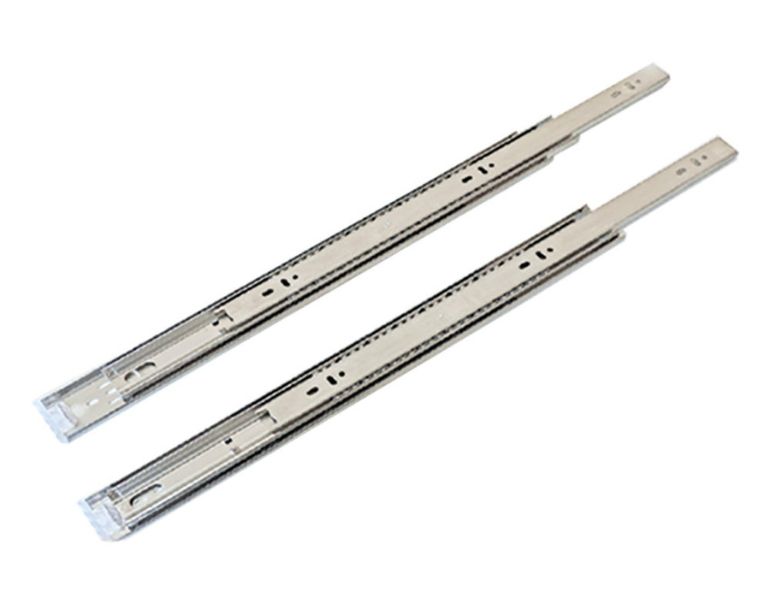
Telescopic channels are a specialized category of drawer channels designed to extend in multiple stages, allowing drawers to slide outward smoothly while maintaining load balance. Their telescoping action enables deeper access compared to basic slide mechanisms, making them essential in modular kitchens and wardrobes.
From a systems perspective, telescopic channels must align with:
-
Standardized cabinet depths used in modular furniture
-
Drawer box dimensions across kitchen and wardrobe applications
-
Load requirements driven by storage function and usage frequency
Manufacturers and suppliers ensure that telescopic channels are produced with consistent dimensions and tolerances so they integrate reliably across modular systems.
Extension Types and Functional Performance
Partial, Full, and Over-Extension Mechanisms
Telescopic channels are commonly manufactured in partial-extension, full-extension, and over-extension variants. Each extension type serves a distinct functional purpose within modular furniture design.
-
Partial-extension channels are used in shallow drawers or light-duty applications
-
Full-extension channels allow complete drawer access, essential for kitchen storage baskets and pull-out drawers
-
Over-extension channels provide extended reach beyond cabinet depth, supporting ergonomic access in deep pantry units
Selecting the correct extension type is a system-level decision influenced by cabinet geometry, drawer purpose, and accessibility requirements.
Load-Bearing Capability and Engineering Precision
Load capacity is a defining performance factor for telescopic channels. In Indian kitchens and wardrobes, drawers often carry significant weight and are subjected to frequent daily use.
From a manufacturing standpoint, load performance depends on:
-
Steel grade and material thickness used in channel sections
-
Ball bearing quality, spacing, and retention design
-
Precision forming and assembly processes
Telescopic channel manufacturers test channels for static load, dynamic movement, and long-cycle endurance to ensure consistent performance across large production volumes.
Material Selection and Surface Treatment
Steel remains the primary material for telescopic channels due to its strength and dimensional stability. Surface treatments such as zinc plating or protective coatings enhance corrosion resistance, especially in kitchen and bathroom environments.
Telescopic channels frequently operate alongside stainless steel kitchen accessories, organisers, and storage baskets. Material compatibility between steel channels and stainless steel components supports smooth operation and long-term durability across modular systems.
Integration with Drawer Systems and Pull-Out Applications
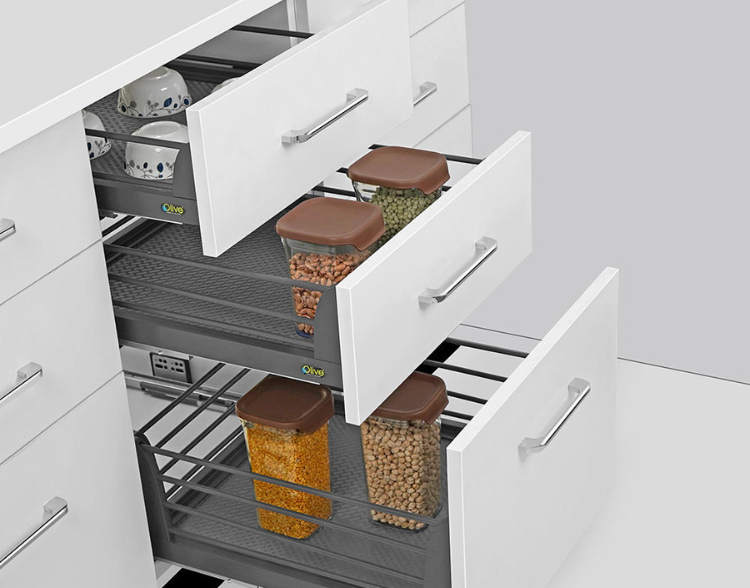
Telescopic channels form the mechanical foundation of various modular furniture applications, including:
-
Drawer systems used in modular kitchens and wardrobes
-
Pull-out kitchen drawers and cutlery organisers
-
Soft-close pantry pull-out and tall-unit storage solutions
In these systems, channel length, extension range, and load rating must be precisely matched with drawer frames and cabinet structures. Suppliers who understand system integration help OEM partners reduce installation variability and improve end-user experience.
Role in Modular Kitchen Storage Baskets and Corner Units
Modular kitchen storage baskets, bottle pull-outs, and corner units rely heavily on telescopic channel performance. These applications often involve uneven load distribution and complex movement paths.
Manufacturing consistency ensures that telescopic channels used in kitchen baskets and corner mechanisms maintain alignment, resist deformation, and deliver smooth movement even under high load conditions.
Telescopic Channels in Wardrobe and Sliding Systems
Beyond kitchens, telescopic channels are widely used in wardrobe systems for internal drawers, pull-out trays, and accessory organisers. These components must operate quietly and remain stable over long spans.
In wardrobe applications:
-
Wide drawers demand high load-bearing and anti-sag performance
-
Compatibility with modular wardrobe sliding systems is essential
-
Alignment with aluminium profiles ensures structural accuracy
Suppliers serving both kitchen and wardrobe manufacturers benefit from standardized telescopic channel specifications across furniture categories.
Aluminium Profiles and Structural Alignment
Aluminium profiles are commonly used in modular furniture frameworks, drawer frames, and sliding systems. Telescopic channels must be dimensionally compatible with aluminium structures to ensure accurate installation and smooth operation.
System-level alignment between aluminium profiles, telescopic channels, and stainless steel accessories simplifies manufacturing, sourcing, and on-site assembly.
Coordinated Hardware Ecosystems: Kitchens to Bathrooms
Telescopic channels often form part of broader hardware ranges that include stainless steel kitchen storage baskets, kitchen organisers, and bathroom accessory fittings. While functional requirements vary, manufacturing principles remain consistent:
-
Corrosion resistance in moisture-prone environments
-
Structural stability under repeated use
-
Consistent quality across coordinated hardware systems
For distributors and project contractors, sourcing telescopic channels as part of an integrated hardware ecosystem improves quality control and supply-chain efficiency.
Manufacturing Consistency and Supply Reliability in India
India’s modular furniture market operates at scale, serving residential, commercial, and institutional projects. Telescopic channel suppliers play a key role in supporting this scale by ensuring:
-
Uniform specifications across production batches
-
Reliable availability in standard and project-specific sizes
-
Quality benchmarks aligned with internal and industry standards
Supply reliability reduces project delays and ensures long-term system performance across installations.
Conclusion: Telescopic Channels as System-Critical Components
Telescopic channels are fundamental to the performance of modern modular furniture systems. Their engineering precision, load capacity, and compatibility directly influence the usability and durability of drawers, baskets, and pull-out solutions.
By approaching telescopic channels through a system-integration lens—rather than as isolated components—manufacturers and suppliers contribute to more reliable, high-performance modular kitchens, wardrobes, and storage solutions across India.
As modular living continues to evolve, telescopic channels will remain a critical link between furniture design, manufacturing discipline, and everyday functionality.
Drawer.png)